
Your villagers
Villagers have names, needs, skills and memories. They decide and work whether or not the camera is on them.
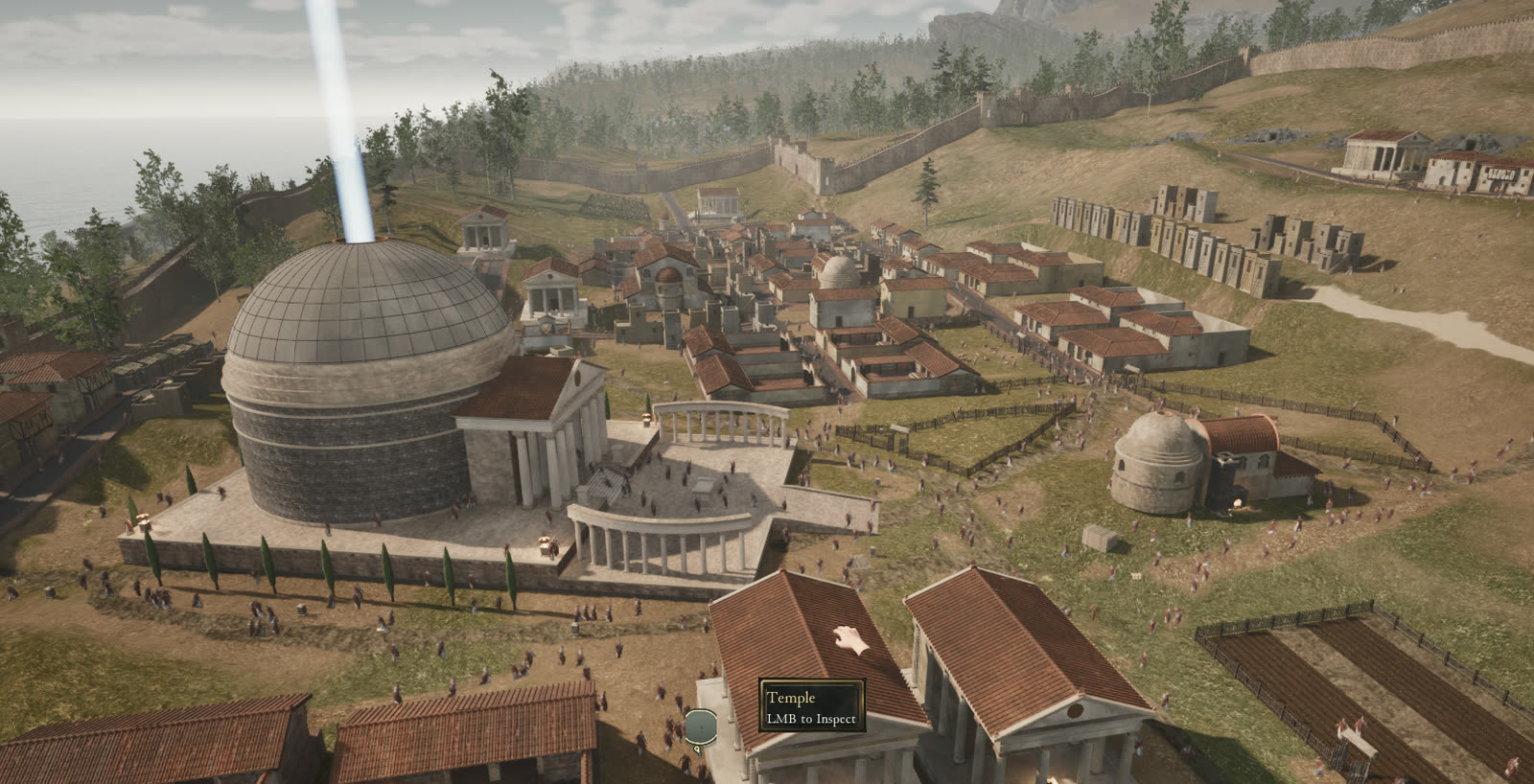
What a villager carries
A villager has an identity, a home when housed, health, needs, a mood, skills and traits, whatever they are carrying, and a memory of events they have witnessed. Villagers with bodies can show visible reactions to events they witness.
Short lines appear over their head describing what they are doing and what they are short of, so a problem in the settlement is visible without opening a panel.
The jobs
The settlement publishes the work it needs, and villagers take it up. What is published follows what is being built, what needs repair, the food reserve, and whether a pen has room for more animals. Some of the trades are listed below.
| Trade | What the loop is |
|---|---|
| Woodcutter | They find a tree, chop it standing until it falls, limb the trunk, collect the wood and haul it. |
| Miner | They work a deposit until their load is full or the deposit is empty, then haul ore to a smelter with room, or to a storehouse. |
| Hunter | They find prey, close on it, kill it, butcher it and haul the meat. |
| Builder | They claim a slot at a site, fetch and deliver material, then add build progress. |
| Farmer | They take a crew slot, walk to a row that needs work, and till, sow or reap it. |
| Herder | They find an animal a pen wants, bring it home and pen it, or tend a pen and haul what it produces. |
| Millworker | Workers take free stations at a mill, filling the treadwheel before the bench. One drives the saw, while the other feeds it and carries the planks out. |
| Smelter hand | Workers take stations at the bellows and furnace, then haul the smelted metal to storage. |
| Fisherman | Drop them on a pond, or hire them from that pond's Fish row. They fish from the bank and carry the fish to storage. |
| Gatherer | They walk to berry forage at a wood's edge, pick, and haul the berries to storage. |
Fisherman and Gatherer are new, and neither has had a play session yet.
A mill or a smelter stops when there is too little room in its output stack. Workers can carry the output to storage to make room for more.
What they need
A hungry villager with food available stops work and eats before they carry on. Overwork is tracked separately: it drains health and can be fatal. Exhaustion makes a villager sleep even when a job is waiting for them.
Beds are claimed and belong to the villager who claimed them. Households draw goods according to how many people live in them, and firewood is carried in for the cold. Empty houses draw nothing.
A mild illness slows a villager's work. A serious illness puts them on bed rest even if they have been given a job. They recover, or they die. The healing miracle breaks a fever.
Where the day goes
Villagers drop expired work assignments and suspend their own movement while carried, airborne, ragdolling or dead. Children skip the job loop. Adults handle reactions, rest, meals and market errands before continuing their work.
At night most villagers stop work and go home. They can be kept working after dark, but exhaustion makes them sleep. A sleeper wakes in daylight once sufficiently rested.
Working away from the camera
A villager who is out of sight still decides, still walks their route and still adds to the stores. The figures on the panels when you return include what was produced while you were looking elsewhere.
Dying
Carried wood, ore, planks and metal become piles when a villager dies; food returns to the settlement's food reserve, while a household good in transit is lost. Bodies can be carried to a burial place. The settlement tracks whether its dead have been buried.